July 2, 2026
The AI market in 2026 has become genuinely crowded, and the volume of benchmark comparisons, capability demonstrations, and competitive announcements has created an environment in which business leaders who are not themselves AI researchers find it increasingly difficult to form practical judgments about which tools deserve their organization’s attention. Benchmarks that measure model performance on standardized tests are useful for researchers tracking the frontier of AI capability; they are nearly useless for a marketing leader trying to decide which tool will improve their team’s output, or a CEO trying to determine whether their organization’s AI investment is pointed in the right direction.
The more useful frame for practical tool selection is not “which AI is most capable?” but “which AI is most capable at the specific tasks my organization needs done?” The answer varies meaningfully by use case, and it is considerably more stable than the benchmark comparisons that dominate AI media coverage – because capability differences between leading models on specific task categories change slowly, even as overall performance rankings shift with each new release. This guide provides a practical task-by-task orientation for the AI tools most relevant to business leaders in 2026, based on observed performance patterns across the categories of work where AI is generating the most consistent value.
Keywords: AI tools 2026, ChatGPT vs Claude, best AI for business, AI for writing, AI for research, Perplexity AI, Gemini AI, AI tool comparison, business AI guide
Best Overall Business Assistant – ChatGPT
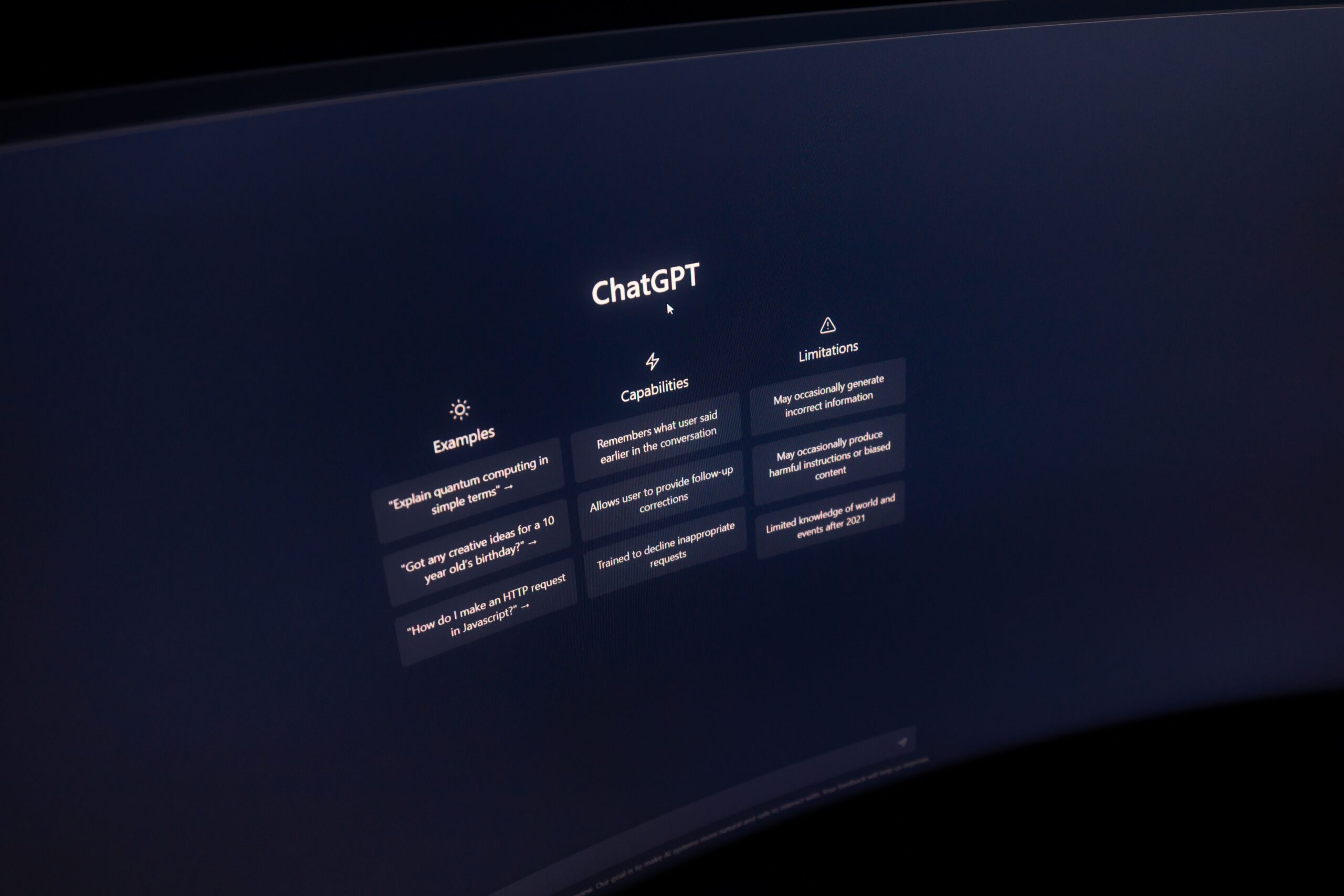
For organizations that need a single AI tool that covers the broadest range of business tasks with reliable competence, ChatGPT remains the most defensible choice as a starting point. Its breadth is genuine: writing assistance, research support, data analysis, code generation, image creation, presentation structuring, and conversational reasoning are all available within a single interface, and the quality across these categories is consistently sufficient to be immediately useful to employees who are encountering the tool for the first time.
The argument for ChatGPT as a first tool is not that it is the best in any specific category – it is often not – but that it is consistently good enough across enough categories to generate immediate value across a broad range of roles and functions, without requiring employees to develop expertise in multiple specialized tools before seeing returns. For many organizations, particularly those in early stages of AI adoption, this breadth-over-depth profile is more practically valuable than the superior performance a more specialized tool would provide in a narrower range of tasks.
Best for Writing and Document Analysis – Claude
Among business leaders and knowledge workers whose primary activities involve producing and processing substantial volumes of text – reports, strategy documents, proposals, contracts, legal materials, policy documents – Claude has established a clear practical advantage. It handles large, complex documents with a degree of structural coherence and nuance that users of other models frequently find superior, and its writing tends toward clarity and precision rather than the generic fluency that characterizes outputs from models optimized primarily for broad accessibility.
The use cases where Claude consistently performs at the highest level include synthesizing complex information from lengthy source documents, drafting long-form content that requires sustained argument structure rather than short-form generation, reviewing and improving existing writing while preserving the author’s voice, and stress-testing analytical documents by identifying gaps, assumptions, and logical inconsistencies that require attention. For teams that spend significant portions of their workday reading, writing, reviewing, or synthesizing information, Claude is worth serious evaluation as the primary tool – not as a supplement to a general-purpose assistant but as the core AI capability around which other tools are organized.
Best for Research – Perplexity
Research tasks, understood as the need to quickly develop accurate, sourced understanding of a topic rather than generate original content, are where Perplexity has established a distinctive practical advantage. The tool retrieves current information from across the web, synthesizes it into structured responses, and provides direct citations to source material – a combination that makes it possible to develop a credible preliminary understanding of almost any topic in minutes rather than hours, and to verify the provenance of that understanding in a way that general-purpose AI models, which rely on training data rather than live retrieval, do not support.
Many professionals have converged on a workflow that begins with Perplexity as the research entry point: developing an initial landscape of a topic, identifying the most relevant sources and perspectives, and building the factual foundation before moving to ChatGPT or Claude for deeper analysis, synthesis, or document production. This is a highly effective combination that reflects a natural division of labor between retrieval-focused and generation-focused tools, and it tends to produce better research outcomes than either tool would achieve independently.
Best for Presentations – ChatGPT
Presentation quality is determined less by the visual quality of slides than by the quality of the thinking that structures them, and this is where AI assistance generates the most consistent value in the presentation workflow. ChatGPT performs particularly well in the upstream phases of presentation development: structuring the narrative arc of a presentation around a clear argument, developing an outline that sequences ideas logically, identifying gaps in the reasoning that would weaken the presentation’s persuasive force, generating and refining speaker notes that enable natural delivery rather than reading from slides, and adapting content for different audiences in ways that require genuine understanding of what those audiences need to hear.
For organizations that produce presentations regularly – client deliverables, board materials, strategic proposals, sales presentations – the value of AI assistance in this workflow is most readily captured in the thinking phase rather than in the production phase. Tools that help structure and strengthen the argument behind a presentation will consistently produce better outcomes than tools that primarily accelerate the creation of slides around an argument that has not been adequately developed.
Best for Spreadsheets and Data Analysis – ChatGPT
Business leaders frequently underestimate how much value AI can generate in the domain of quantitative work, particularly for those whose primary role does not require deep data literacy. ChatGPT is particularly strong at explaining complex formulas in accessible terms, building structured analyses from datasets shared in conversation, identifying patterns and anomalies in data, creating narrative summaries that translate quantitative findings into plain-language insights, and guiding users through the construction of dashboards and analytical frameworks without requiring proficiency in the technical tools underlying them.
For executives and managers who work with financial models, operational metrics, or market data but do not have data science backgrounds, this capability can substantially reduce dependence on analytical specialists for work that requires interpretation rather than primary analysis – a meaningful productivity gain in organizations where data literacy is unevenly distributed and analytical capacity is a limiting resource.
Best for Strategy Work – Claude
Strategy work requires capabilities that are different from and often harder to assess than the competencies measured in standard benchmarks: sustained analytical coherence across complex, multi-dimensional problems; the ability to hold multiple perspectives simultaneously without collapsing them into false simplicity; sensitivity to the assumptions and second-order implications embedded in arguments; and the capacity to stress-test frameworks against edge cases and counterarguments rather than merely generating arguments in their favor.
Claude tends to perform at the highest level on precisely these dimensions, making it the preferred tool for strategy professionals using AI as a thinking partner in the work of analyzing competitive positions, evaluating strategic trade-offs, reviewing plans for logical consistency, and stress-testing assumptions that have not yet been subjected to external challenge. It will not replace strategic judgment – the quality of the inputs provided to it, the clarity of the questions asked, and the rigor with which outputs are evaluated all remain human responsibilities – but it can meaningfully sharpen strategic thinking when applied as a genuine analytical collaborator rather than as a tool for generating polished-sounding strategy documents.
Best for Marketing Content – Claude and ChatGPT
Marketing content encompasses a range of tasks that differ enough in their requirements to justify different tool selections within the same function. Claude tends to perform at a higher level for long-form content that requires sustained argument, distinctive voice, and the kind of structural coherence that characterizes effective thought leadership, brand writing, and editorial content. ChatGPT tends to be stronger for high-volume content production, multi-format repurposing, campaign ideation, and the generation of content variants across different channels and audiences – tasks that benefit more from speed and breadth than from depth and voice consistency.
Marketing teams that do significant volumes of both types of work will often find that a combination of both tools, used intentionally for their respective strengths, outperforms either tool used exclusively – and that the decision about which tool to use for which task is itself worth investing time in establishing, because the performance difference between using the right tool and the wrong one for a given task is meaningful.
Best for Coding – Claude and ChatGPT
Among professional AI tool users in software development, the comparison between Claude and ChatGPT for coding tasks is the most closely contested category in practical evaluations. Claude tends to perform at a higher level for tasks that require architectural reasoning – understanding large codebases, evaluating structural design decisions, debugging complex systems where the failure mode is not immediately visible in any single component, and explaining code at a conceptual level that helps developers understand rather than merely fix. ChatGPT tends to perform more reliably for feature implementation, technology exploration, rapid code generation from specifications, and interactive troubleshooting where developers need fast iteration on specific problems.
Most engineering teams that have adopted AI coding tools seriously will find that both tools have legitimate places in their workflow, and that developing clear internal norms about which to use for which category of task produces better outcomes than defaulting to a single tool for all coding work.
Best for Companies on Google Workspace – Gemini
For organizations whose operational infrastructure is built around Google’s product suite – Gmail, Google Docs, Google Sheets, Drive, Meet, and Calendar – Gemini’s integration depth represents a practical advantage that can outweigh capability differences in specific task categories. The most capable AI in the world creates no value if it requires meaningful friction to access; an AI that is embedded directly in the tools a team uses daily creates value every time those tools are used, without requiring deliberate adoption decisions or workflow adjustments.
Organizations heavily invested in Google Workspace should evaluate Gemini not primarily as a capability competitor to other models but as an infrastructure integration decision: if the workflow fit is strong enough to drive consistent usage, the compounding value of that usage will often exceed the theoretical value of a more capable tool that sits outside the existing workflow.
Conclusion
The practical orientation this guide suggests for organizations making AI tool decisions is to begin with the categories of work that represent the highest-volume or highest-stakes activities in the business, evaluate tools specifically against those categories rather than against general capability benchmarks, and start with one tool – whichever appears most immediately useful – before building toward a more deliberate portfolio. The organizations extracting the strongest returns from AI in 2026 are not those with the most tools or the most sophisticated stacks; they are those with the clearest view of what problems they are solving and the discipline to evaluate tools against operational criteria rather than capability comparisons.
A starting portfolio that serves the majority of business needs well would include ChatGPT as the general-purpose business assistant, Claude for writing, document analysis, and strategy work, Perplexity for research, and Gemini for organizations invested in Google Workspace. From that foundation, additions should be driven by identified operational needs rather than by market awareness of new tools.
Sigma Growth Specialists helps organizations build AI strategies grounded in operational clarity – from initial tool selection through to governance, adoption, and measurement. If your organization is navigating AI tool decisions and wants a more structured approach than capability comparisons provide, we would welcome a conversation.
Bibliography
- Anthropic. “Claude Model Overview.” Anthropic, 2026. https://www.anthropic.com/claude
- OpenAI. “ChatGPT for Business.” OpenAI, 2026. https://openai.com/chatgpt
- Perplexity AI. “Perplexity for Professionals.” Perplexity AI, 2026. https://www.perplexity.ai
- Google DeepMind. “Gemini for Google Workspace.” Google, 2026. https://workspace.google.com/features/ai
- McKinsey & Company. “The State of AI in 2024.” McKinsey Global Institute, 2024. https://www.mckinsey.com
- Davenport, Thomas H., and Nitin Mittal. “How Generative AI Is Changing Creative Work.” Harvard Business Review, November–December 2022. https://hbr.org
- Mollick, Ethan. Co-Intelligence: Living and Working with AI. Portfolio/Penguin, 2024.